|
|
The Three Musketeers |
|
|
|
|
|
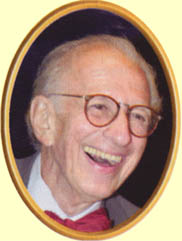
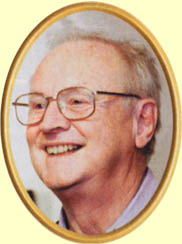
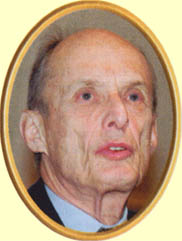
| Dr Eric Kandel, 70 | Dr Arvid Carlsson, 77 | Paul Greengard, 74 |
|
Born in Vienna, Austria, Kandel came t New York in 1939 to escape Adolf Hitler. Now a professor at Columbia University's Howard Hughes Medical Institute in New York, he was once a student of history & literature. It was his desire to become a psychoanalyst that made him attend New York University Medical School. Kandel also studied the role of phosphorylation of proteins at the synapses, focusing on how it effects learning & memory. He originally wanted to study learning in mammals, but concluded that the large number of brain cells made the process too complex to study. He turned instead to the sea slug, Aplysia (illustration), which has about 20,000 nerve cells, compared to the 100 billion in the human brain. He demonstrated that short-term learning is controlled by the phosphorylation of proteins called ion channels at the synapses. These channels let specific ions, such as sodium, into & out of the cells. Long-term memory is produced by more permanent changes in these proteins. He concluded that the synapses are the actual storage sites of memories. He replicated the work in mice, & researchers are confident that the same processes also occur in humans. Kandel's work could lead to new treatments for Alzheimer's & other conditions involving memory loss. |
Born in Uppsala, in Sweden, Carlsson works as Emeritus Professor of pharmacology in the University of Goteborg in Sweden. He is the first Swede to win a Nobel since 1982. Calsson's contributions began in the 1950s when he explored the biology of a brain chemical called dopamine. At the time, dopamine was thought to be little more than a precursor of a more important brain hormone called noradrenaline. His work showed that dopamine was an important hormone in its own right & that it was concentrated in a region of the brain, called the basal ganglia, that controls the motion of limbs. Working in mice, he discovered that blocking dopamine production caused the animals to lose control of their limbs, but that control could be restored by administering L-dopa. He realized that the symptoms displayed by the mice were similar to those of Parkinson's victims, and later research soon showed that humans with that disease also had low levels of dopamine in their basal ganglia. Carlsson also showed that antipsychotic drugs, which are used primarily against schizophrenia, work by blocking dopamine receptors. His research laid the groundwork for the development of a family of drugs called selective serotonin uptake inhibitors which are used in treating depression. |
A biochemist at Rockefeller University in New York, Greengard wasn't in the least expecting to win the Nobel. He was honored for his discoveries of how dopamine & other neurotransmitters actually exert their effects at the synapses, the points of contact between individual brain cells. He found that they do this through a chemical reaction called protein phosphorylation. When dopamine binds to a receptor in a nerve cell, he discovered, it causes a phosphate group to be coupled to a specific protein in such a way that the form & function of the protein are altered. That alteration, in turn, triggers a cascade of other chemical changes that electrical signal along its length. When receptors in the cell membranes are influenced by a chemical transmitter, the levels of the messenger molecule are elevated. This activates so called protein kinases, which cause certain key proteins to become phosphorylated - that is, phosphate molecules are added. These protein phosphorylations lead to changes of a number of proteins with different functions in the cell. When proteins in ion channels are influenced, the excitability of a nerve cell & its ability to send impulses also its branches change. |
|
|
||